
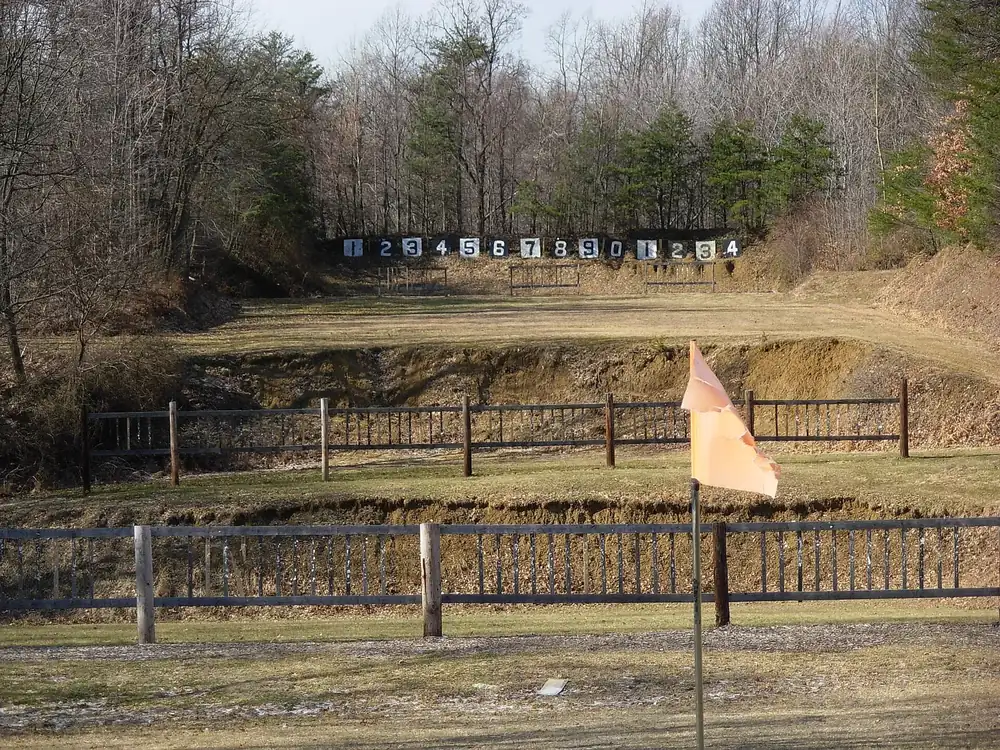
What a shooting range costs depends mostly on how it charges: by the lane and hour (common at indoor ranges), by the day (common at outdoor ranges), by the round of targets (clay sports), or through an annual membership (gun clubs). Some public ranges run by state agencies are free or need only a state permit or license. On top of the range fee, budget for ammunition, targets, and any rentals or protective gear you do not own. Ammunition is often the largest cost of a range trip, not the range fee itself. Prices vary widely by region and facility, so always check the range's own website or call before you go.
Key points
- Ranges charge by the lane and hour, by the day, by the round of clay targets, or through a membership.
- Some public ranges run by state agencies are free or need only a state permit or license.
- Ammunition is often the largest cost of a range trip, not the range fee itself.
- If you shoot often, compare the per-visit cost of a membership to paying as you go.
The main ways ranges charge
| Pricing model | Common at | What to check |
|---|---|---|
| Lane fee | Commercial indoor ranges | Per shooter or per lane, time blocks, peak hours |
| Day pass | Outdoor ranges and some clubs | Which bays are covered, targets, guest fees |
| Membership | Gun clubs and some commercial ranges | Initiation fee, dues, work hours, what is included |
| Clay round | Trap, skeet and sporting clays | Targets per round; shells are extra |
| Free or permit | State agency public ranges | Whether a license, permit or daily fee applies |
Lane fees (indoor ranges)
Most commercial indoor ranges charge per lane, usually for a block of time such as an hour, or for a session. Details that change the total:
- Per shooter vs per lane. Some ranges charge each shooter; others charge for the lane and allow a second shooter for an additional fee.
- Time blocks. Hourly ranges may charge in half-hour increments after the first hour. Some offer unlimited time on weekdays.
- Rifle lanes sometimes cost more than pistol lanes, especially for longer indoor rifle bays.
- Peak hours. Evenings and weekends may cost more or require reservations.
Browse indoor ranges or indoor ranges near you and check each one's pricing page.
Day passes (outdoor ranges and clubs)
Outdoor ranges and some clubs sell a day pass that covers shooting for the whole day, or until close. Some clubs that are mainly membership-based sell guest passes or day passes on certain days. We list 412 ranges that offer day passes; see the day-pass ranges page.
Questions worth asking before you pay for a day pass:
- Does it cover all bays (pistol, rifle, long range), or only some?
- Are targets or target frames included?
- Is there a separate fee for a guest who is not shooting?
- Do you need a safety orientation first, and does that cost extra?
Memberships (gun clubs and some commercial ranges)
Gun clubs usually charge annual dues, often with a one-time initiation fee for new members. Some require work hours, attendance at meetings or a sponsor. In exchange, members get access during set hours (sometimes around the clock with a key card or gate code), member-only events, and often lower fees for classes and matches. We list 513 gun clubs and 314 members-only ranges.
Commercial indoor ranges also sell memberships, typically monthly or annual, which may include free lane time, discounts on ammunition and classes, and priority reservations.
When does a membership pay off? Divide the annual cost by the number of times you realistically expect to go, and compare that to the per-visit price. If you shoot often, a membership usually wins. If you shoot a few times a year, pay as you go. Our guide on how to choose a gun club covers the non-price factors, such as hours, bay types and rules. Browse members-only ranges and gun clubs near you.
Clay rounds (trap, skeet, sporting clays)
Shotgun sports are priced by the round, which covers a set number of targets. A round of trap or skeet is typically 25 targets. Sporting clays courses are commonly sold in rounds of 50 or 100 targets, and some courses rent golf carts to get between stations. Shells are extra. See trap, skeet and sporting clays explained for how a round works, and browse trap, skeet and sporting clays ranges.
Free and permit-based public ranges
State wildlife and natural resources agencies run many outdoor ranges, often supported by the federal Pittman-Robertson excise tax on firearms and ammunition. Access rules differ by state. Some ranges are free. Some require a hunting or fishing license, a range permit, or a daily fee. Rules change, so check the operating agency's website. We list 764 public ranges and 51 listed as free; see public ranges, free ranges, and our guide to finding free and public shooting ranges.
Target shooting on some federal public lands outside developed ranges is also free, subject to the land manager's rules and any fire restrictions. Read our guides to shooting on BLM land and in national forests.
The costs beyond the range fee
Ammunition
For most people, ammunition costs more than range time. Common handgun calibers are usually cheaper per round than many rifle cartridges, and .22 LR rimfire is typically the cheapest way to practice. Some indoor ranges require you to buy ammunition on site, which can cost more than buying elsewhere. Ask before you go.
Rentals
Ranges with rentals charge per firearm, sometimes with a requirement to buy ammunition from the range. Some offer packages that bundle a lane, a rental and a box of ammunition for beginners. We list 239 ranges with rentals.
Targets
Most ranges sell paper targets at the counter. Buying paper targets in bulk ahead of time and using target pasters to patch holes stretches each one further. Check that the range allows outside targets, and see our targets guide.
Protective gear
Ranges rent or sell eye and ear protection, but owning your own is cheaper over time and fits better. A pair of shooting safety glasses and foam ear plugs covers the basics. Electronic earmuffs are a common upgrade. See our guides to hearing protection and shooting glasses.
Lessons and classes
Intro classes, private lessons and certification courses are priced separately from lane time. Many ranges bundle a short class with a lane and rental for first-timers. We list 443 ranges with lessons and 70 firearms academies.
What makes one range cost more than another
- Location. Ranges in and near large cities tend to charge more than rural ones.
- Indoor vs outdoor. Indoor ranges carry the costs of ventilation, lead management and staffing. Our indoor vs outdoor guide compares them.
- Staffing. A range with ROs on duty all day costs more to run than an unstaffed public range.
- Facilities. Long range bays, action bays, steel targets, climate-controlled shooting houses and classrooms all add cost.
- Ownership. State agency ranges and volunteer-run clubs often cost less than commercial ranges.
How to spend less
- Shoot .22 LR for fundamentals. It is cheaper per round and the low recoil helps with trigger control.
- Go off-peak. Some ranges discount weekday or early lane time.
- Split a lane. If two-shooter lanes are allowed, share the fee.
- Bring your own gear and targets, if the range allows outside targets.
- Use public ranges. Check your state wildlife agency's list of ranges.
- Join a club if you go often. Do the per-visit math first.
- Practice dry fire at home with an unloaded firearm and no ammunition in the room, following the four safety rules, to make each live round count. A set of snap caps can help with some firearms.
- Keep a stocked range bag so you are not buying forgotten items at the counter. Our range bag checklist lists what to pack.
Wrap-up
Range costs come in a few shapes: lane fees, day passes, memberships, clay rounds and permits, plus ammunition, targets and rentals. Check each range's current pricing before you go, and compare per-visit costs to membership if you shoot often. To compare options near you, find a range near you, browse day-pass ranges and free ranges, or look up ranges by state. Know a range we are missing? Add it to the directory.