
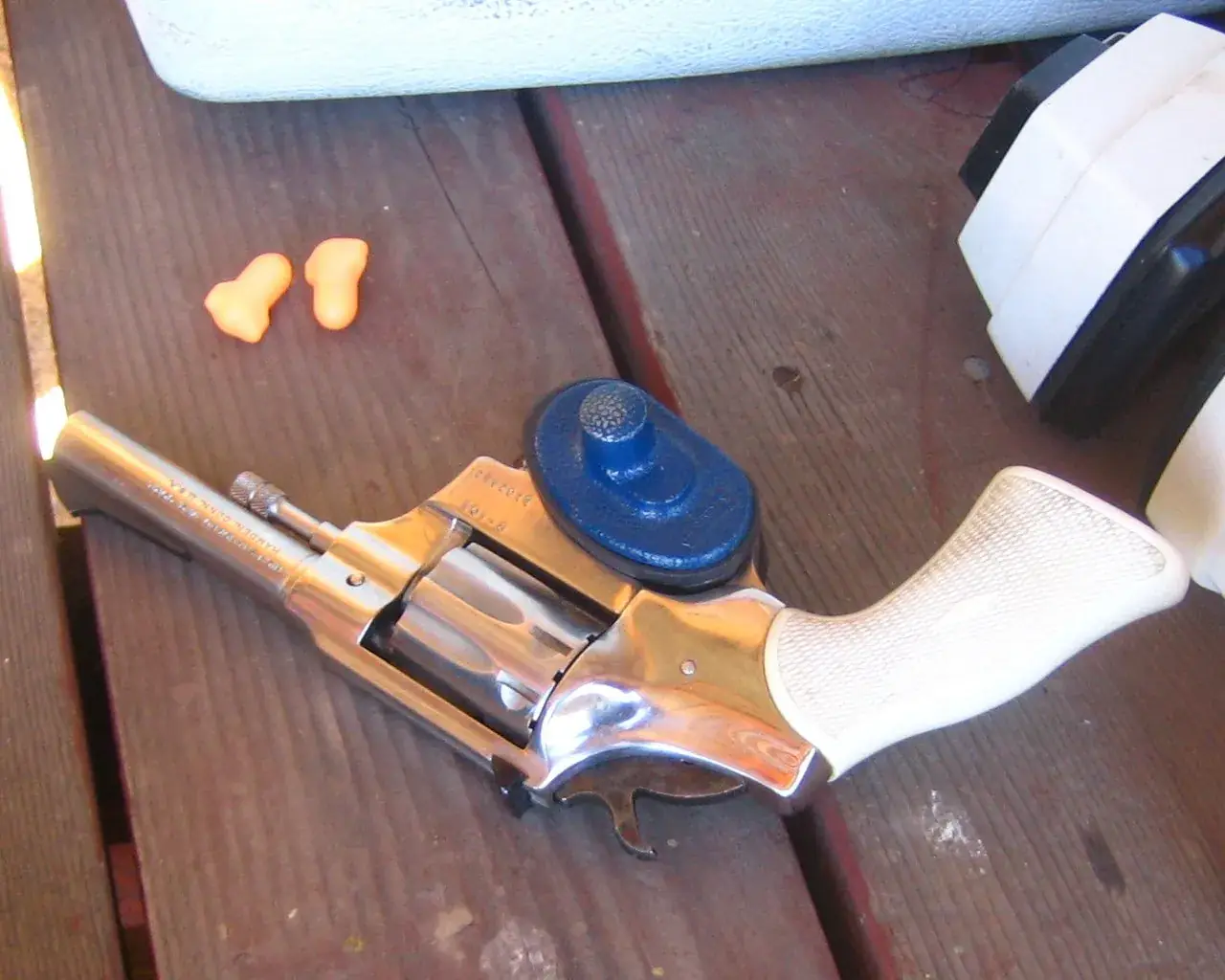
A good range bag holds four groups of things: safety gear (eye and ear protection, a first aid kit), what your firearm needs (magazines, ammunition, a chamber flag, basic tools), targets and the means to hang them, and personal items (ID, water, hand cleaning supplies). Pack those and you can handle almost any range visit. The checklist below covers the essentials first, then extras for outdoor ranges, rifle days and shotgun sports.
Keep the bag packed between trips and restock after each visit. Most forgotten items are things you used up last time: targets, staples, ear plugs.
Key points
- Every range bag needs four groups: safety gear, firearm items, targets and hanging supplies, and personal items.
- Keep the bag packed between trips and restock right after each visit.
- Add extras for outdoor ranges, rifle days or clay days as needed.
- Check each range's rules on ammunition, targets and holster use before you go.
The core checklist
Safety gear
- Eye protection. Impact-rated shooting glasses, plus a spare pair for a guest. Look for glasses marked ANSI Z87.1. Clear lenses for indoors and low light, tinted for bright outdoor days. More in our shooting glasses guide.
- Hearing protection. Earmuffs, plugs, or both. Electronic earmuffs amplify voices and range commands while cutting off gunshot noise. Keep a handful of foam plugs in a side pocket for doubling up or for a friend. See our hearing protection guide.
- Spare batteries for electronic muffs and any optics.
- First aid kit. A basic kit for cuts, burns and blisters, and ideally a bleeding control kit with a tourniquet. A trauma kit with a tourniquet only helps if you know how to use it, so consider a bleeding control class.
- A brimmed cap to keep ejected brass from dropping behind your glasses.
For your firearm
- Firearm, unloaded, in a case. Check range rules and your state's transport laws. Our post on gun cases and transport covers the basics.
- Magazines, unloaded for travel unless you know your local laws allow otherwise.
- Ammunition in the correct caliber, in its original box or a labeled container. Confirm the range allows the type you bring; many ban steel-core and tracer rounds, and some indoor ranges require ammo bought on site.
- Chamber flags. A chamber flag shows the action is empty during cold range periods. Many ranges require them.
- Magazine loader if your magazines are stiff. A magazine loader saves your thumbs on a long session.
- Basic tools. A multitool, the hex or Torx keys that fit your optic mounts, and a small screwdriver set.
- Cleaning essentials. You do not need a full kit at the range, but a bore snake, a small bottle of lubricant and a rag handle most range-day issues. A compact cleaning kit fits in most bags. See our cleaning kit basics.
- Holster and belt, if the range allows holster work and you are qualified to do it there.
Targets and target hanging
- Paper targets. Bring more than you think you need. Bullseye targets suit precision work; silhouette targets suit defensive practice. Paper targets come in pads or rolls. Our targets guide covers paper, steel and reactive options.
- Target pasters to cover holes so you can reuse a target.
- Stapler and staples, or binder clips, for outdoor target frames.
- Painter's tape as a backup way to hang targets.
- A marker for numbering groups or noting distances on the target.
Personal items
- Photo ID and any range membership card or permit. State-operated ranges sometimes require a permit or license; check the operator's website.
- Water.
- Hand wipes or lead removal soap. Wash before you eat, drink or touch your face. Lead residue builds up on hands. Lead removal wipes are designed for this.
Tip: Most forgotten items are things you used up last time. Restock targets, staples and ear plugs as soon as you get home.
- A notebook or phone app for logging groups, drills and rifle zero data.
Extras for outdoor ranges
Outdoor ranges vary from staffed facilities to bare-bones public areas with a berm and a bench. Add these for outdoor days:
- Sunscreen and bug spray.
- Weather layers and a rain shell.
- A folding chair if benches are limited.
- A portable target stand if the range does not supply frames. Check whether the range allows your own stands. A portable target stand with replaceable furring strips is simple and light.
- A trash bag to pack out targets, boxes and brass. Some public ranges have no trash service.
- A brass pickup tool or bag, if the range lets you collect your own.
If you are planning to shoot on public land rather than at a developed range, rules about target types, backstops and fire risk are set by the land manager. Read our guides to shooting on BLM land and shooting in national forests first.
Extras for rifle days
- Shooting rest or bags. A front rest and rear bag make zeroing much easier. A set of shooting rest bags is a good start.
- Spotting scope or binoculars to see bullet holes at 100 yards and beyond. A spotting scope on a tripod lets you check hits without walking downrange. See our post on binoculars and rangefinders.
- Rear shooting mat if you shoot prone.
- Your zero data and scope adjustment values. See sighting in a rifle before hunting season.
Extras for shotgun and clay days
- Shell pouch or vest to carry shells between stations.
- Chokes and a choke wrench if your shotgun uses interchangeable chokes.
- Shooting glasses with tinted lenses suited to the light; many clay shooters carry several lens colors.
- Range-provided targets are usually included in the round fee, so you do not need to bring clays to a trap, skeet or sporting clays field. Read trap, skeet and sporting clays explained for how a round works.
Choosing the bag itself
Any sturdy bag works, but dedicated range bags have features that help:
- Padded or zippered pistol compartments, if you carry handguns in the bag.
- Elastic magazine loops to keep magazines organized.
- A stiff base so the bag stands up on a bench.
- Water-resistant material for outdoor use.
- Separate pockets for ammunition, so heavy boxes do not crush your glasses.
Keep your firearm in its own case rather than loose in the bag unless the bag is designed for that. Many shooters use a lockable pistol case inside the range bag.
After the range
When you get home, restock right away while you remember what ran low: targets, staples, plugs, batteries and wipes. Clean and store your firearms, then wipe down your bag if it picked up lead dust. If you shoot often, a quick inventory after each trip is easier than discovering a missing item on the firing line.
Wrap-up
Pack the core list once and keep it in the bag permanently, then add the outdoor, rifle or shotgun extras as needed:
| Day type | Add to the core bag |
|---|---|
| Outdoor range | Sunscreen, bug spray, layers, target stand, trash bag |
| Rifle day | Rest or bags, spotting scope, shooting mat, zero data |
| Clay day | Shell pouch, chokes and wrench, tinted lenses |
Before you head out, check the range's rules on ammunition, targets and holster use. To plan your next trip, find a range near you, browse outdoor ranges or ranges by state, or find a local gun shop to restock targets and ammunition. If a range near you is missing, add it to the directory.