
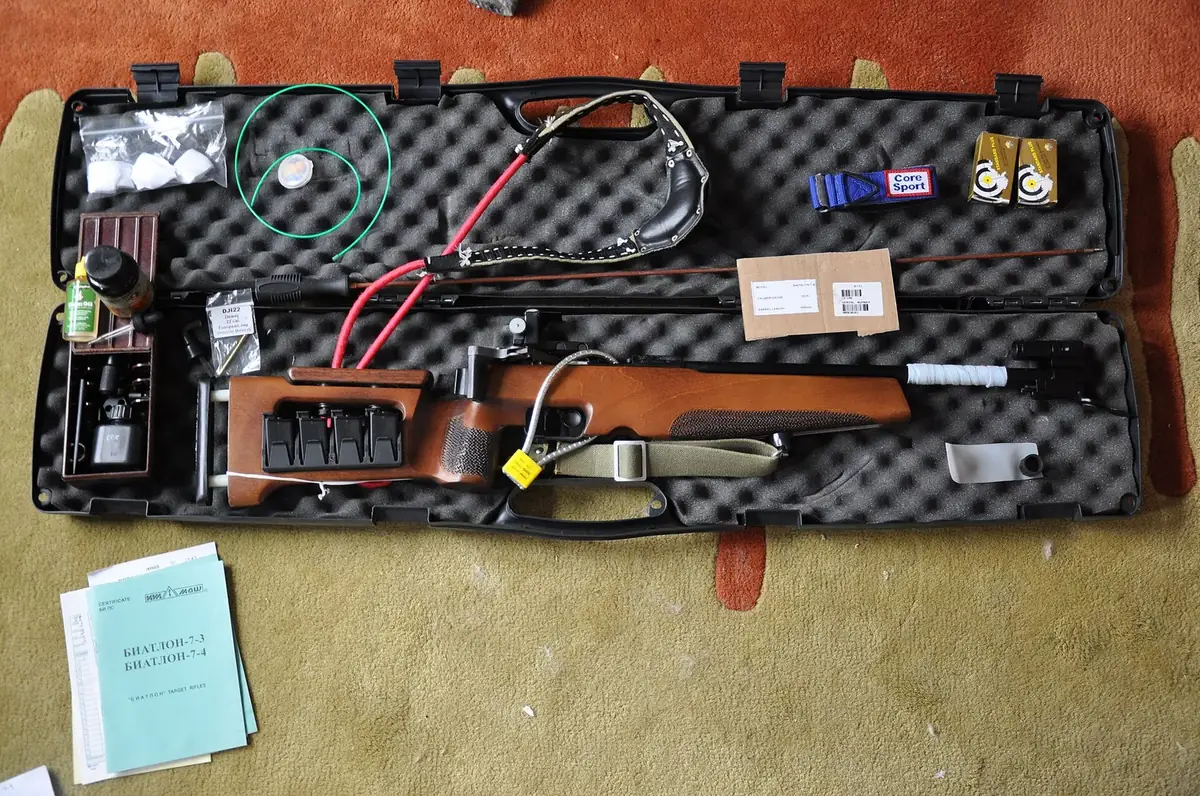
The safe way to get a firearm to the range is simple: unload it at home, put it in a case (locked if your state or city requires it, and a good idea anyway), keep ammunition separate, and store the case out of reach of the passenger area while you drive. Transport laws vary a lot by state and even by city, so the right case and routine for you depend on where you live, where you are going, and every place in between. This guide covers how to choose a case, how to pack it, what the federal safe-passage provision does in general terms, and what the TSA requires if you fly.
Key points
- Unload at home, case the firearm, keep ammunition separate, and keep the case out of reach of the passenger area.
- Hard cases suit air travel, scoped rifles and locked-container rules; soft cases suit short local drives where the law allows them.
- The federal safe-passage provision (18 U.S.C. 926A) has limits, so check the law of every state and city on your route.
- The TSA requires firearms to be unloaded, in a locked hard-sided case, in checked baggage, and declared to the airline.
Why the case matters
Most ranges expect firearms to arrive cased and unloaded, and many have a rule that you only uncase at the firing line or a designated safe area. Walking through a parking lot or a lobby with an uncased gun is one of the fastest ways to get asked to leave. If you are new to range routines, our guide to shooting range rules and etiquette covers this in more detail.
A case also protects the firearm itself. Optics get knocked off zero, finishes get scratched and sights get bent when a gun rattles around a trunk.
Hard cases vs soft cases
Both have a place. In short:
| Case type | Best for | Trade-offs |
|---|---|---|
| Hard case | Flying, scoped rifles, locked-container rules, truck beds | Heavier and bulkier |
| Soft case | Local range trips by car where the law allows it | Less impact protection, easy to cut, not allowed for air travel |
| Pistol case in a range bag | Handguns on routine range trips | Check whether the bag's pistol compartment locks |
Hard cases
Hard cases are made of molded plastic, polymer or aluminum, with foam inside. They are the better choice when:
- You are flying (the TSA requires a locked, hard-sided container for checked firearms).
- You carry scoped rifles and want to protect the optic and its zero.
- Your local law calls for a locked container during transport.
- The case will ride in a truck bed, a shared trunk or a crowded vehicle.
Look for lockable latches or built-in padlock holes (ideally at least two, and more on long cases), a sturdy hinge, and foam you can cut or "pick and pluck" to fit your firearm. Wheels help on long cases you will drag through an airport. Browse lockable hard rifle cases and lockable hard pistol cases to compare sizes and features.
Check the interior length against your firearm with any optic or bipod attached.
Soft cases
Soft cases are padded fabric bags. They are lighter, cheaper, quicker to load and easier to carry from the car to a bench. They work well for local range trips by car where your law does not require a locked hard container. Many have zippered pulls with holes for a small padlock, and outside pockets for magazines, ear protection and targets.
The trade-offs: less impact protection, easy to cut open, and not allowed for air travel. Browse padded soft rifle cases if you mainly drive to a nearby range.
Pistol cases and range bags
For handguns, a small lockable pistol case that slides into a range bag is a tidy setup. Some range bags have a built-in pistol compartment, but check whether it locks. Our range bag checklist covers what else goes in the bag.
Locks and keeping ammunition separate
A case lock keeps casual hands out and, in many places, is part of what the law considers "secured." A few common options:
- Padlocks on the case latches. Keyed or combination, sized to fit your case's lock holes.
- Cable locks. A cable gun lock runs through the action or magazine well so the firearm cannot be loaded or fired. Many new firearms come with one.
- Trigger locks. These clamp around the trigger guard. Only use one on an unloaded firearm, and follow the maker's instructions.
- Vehicle lockboxes. A small vehicle lockbox that tethers to the seat frame can be useful if you have to leave the car for a short stop, though it is not a substitute for taking the firearm with you or going straight to the range.
Keep ammunition in its original boxes or a separate container such as an ammo can. Some state and local rules require ammunition to be stored separately from the firearm during transport, and even where they do not, it is a sensible habit. Unload magazines too if your local rules treat a loaded magazine as a loaded firearm.
Loading the car
A routine that works in most places, subject to your local law:
- Unload at home. Remove the magazine, clear the chamber, and visually and physically check that it is empty. Keep the muzzle pointed in a safe direction and your finger off the trigger the whole time.
- Lock the action open or install a cable lock if the firearm design allows it.
- Case it and lock the case.
- Put the case in the trunk or cargo area, out of reach of the passenger compartment. In a vehicle without a trunk, a locked case behind the rear seat or in a locked vehicle box is the usual approach.
- Pack ammunition separately.
- Go directly to the range. Long detours with firearms in the car (restaurants, schools, post offices, government buildings) can run into laws about where firearms may be present, even cased.
- Uncase only where the range tells you to.
Do the reverse on the way home: unload and check at the line, case it there, and carry it cased to the car.
Crossing state lines: the federal safe-passage provision
Federal law includes a safe-passage provision, 18 U.S.C. 926A, which came from the Firearm Owners Protection Act. In general terms, it protects a person who may lawfully possess a firearm when transporting it from one place where they can legally possess and carry it to another place where they can legally possess and carry it, as long as the firearm is unloaded and neither the firearm nor ammunition is readily accessible from the passenger compartment. In vehicles without a separate trunk, it calls for a locked container other than the glove box or console.
That provision has limits, and how it applies in practice depends on the facts of your trip. It does not make a firearm legal at a destination where it is not, and it is not a substitute for knowing the law of each state and city you will pass through. Before any interstate trip with firearms, check:
- Your home state's transport rules.
- The rules of every state you will drive through, and any large cities on the route.
- The rules at your destination.
- The ATF for federal information.
State attorney general and state police websites usually publish plain-language transport guidance. This article is general information, not legal advice. If you have a specific situation, talk to a lawyer in the relevant state.
Flying with firearms
The TSA rules for firearms in air travel are specific, and they apply in addition to your airline's rules. According to the TSA, firearms:
- Must be unloaded.
- Must be in a locked, hard-sided container. A case that can be easily pulled open while locked does not qualify.
- Travel in checked baggage only, never in carry-on bags.
- Must be declared to the airline at check-in, each time you check them.
The TSA also says only the passenger should keep the key or combination, and ammunition is not allowed in carry-on bags but may go in checked baggage in proper packaging. Airlines set their own ammunition quantity limits and may have extra rules about cases and check-in. Rules can change, so read the current page at tsa.gov and your airline's firearm policy before every trip, and remember that the laws of your destination apply once you land.
A few practical points for air travel:
- Use a sturdy hard case with wheels for long guns and quality locks on every lock point.
- Arrive early. Declaring a firearm adds time at the counter.
Taking care of the case
- Dry everything before casing it. A firearm put away wet from rain, or a case full of damp foam, invites rust. Leave the case open at home to air out after a wet day.
- Do not use the case for long-term storage unless it is designed for it. Foam can hold moisture against metal. At home, a safe or locked cabinet is the better place (see our gun safes and home storage primer).
- Replace worn foam if the firearm can shift inside.
Gear for this
- Lockable hard rifle case
- Cable gun locks
- Ammo can for keeping ammunition separate
Wrap-up
Unload at home, case and lock it, keep ammunition separate, keep it out of reach while you drive, and go straight to the range. Check the transport rules wherever your route takes you, and use the TSA's current page if you fly. When you are ready to go, find a range near you or browse outdoor ranges and indoor ranges. If your local range is missing from the directory, you can add it here.