
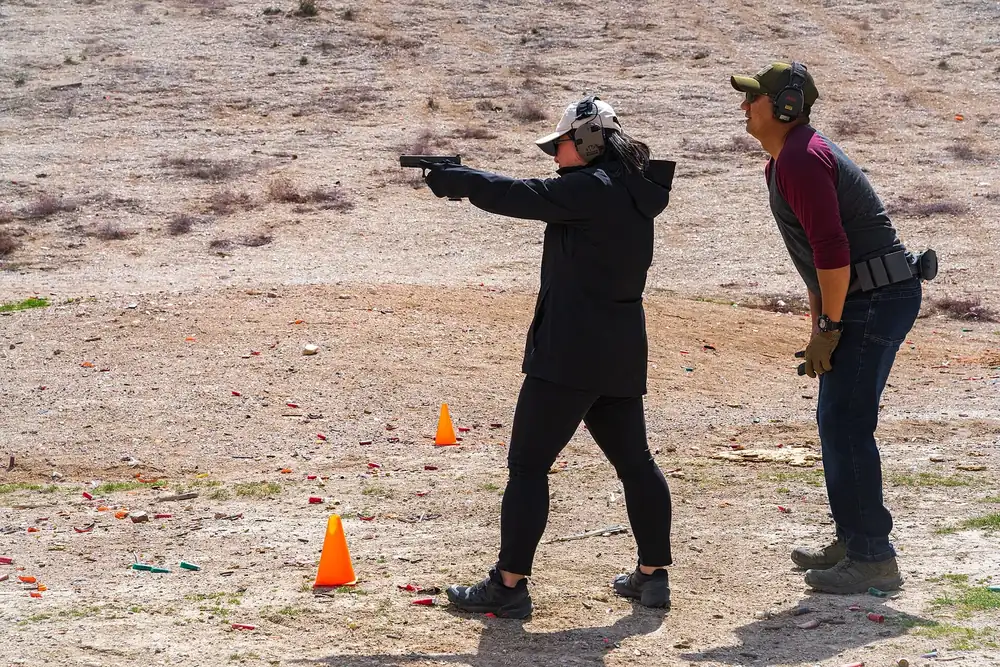
Every shooter needs hearing protection, every time, because a single gunshot is roughly 140 to 175 decibels, well above the level that can cause permanent hearing damage. Passive protection (foam plugs and standard earmuffs) blocks sound all the time. Electronic protection blocks loud impulses but lets you hear conversation and range commands. The Noise Reduction Rating (NRR) tells you how much a device reduced noise in lab testing, and for loud calibers or indoor ranges many shooters wear plugs and muffs together. Here is how to choose.
Key points
- A gunshot is roughly 140 to 175 dB, and hearing damage from noise is cumulative and permanent.
- Passive protection blocks sound all the time; electronic protection lets you hear voices and commands while cutting loud impulses.
- NRR is a lab rating, and real-world protection depends heavily on fit.
- Double up with plugs under muffs for loud calibers, muzzle brakes and indoor ranges.
Why hearing protection matters so much at the range
Hearing damage from noise is cumulative and permanent. It does not hurt in a way that warns you, and it often shows up later as ringing in the ears (tinnitus) or trouble following conversation in noisy rooms. Gunfire is an impulse noise: a very short, very loud spike. Even one unprotected shot close to your ear can cause damage, and so can years of shooting with protection that does not fit well.
The person next to you counts too. On a busy line you are exposed to everyone else's shots, not just your own. That is especially true indoors, where sound reflects off walls and ceilings, and under covered firing lines outdoors. Short-barreled firearms and muzzle brakes direct more blast sideways toward neighboring lanes. Suppressed firearms are quieter but still loud enough that hearing protection is expected.
Most ranges require eye and ear protection on the line. Our guide to your first time at a shooting range covers the other basics.
What NRR means
NRR stands for Noise Reduction Rating. In the United States, the EPA requires hearing protectors sold here to carry an NRR on the label. It is expressed in decibels (dB) and comes from standardized lab testing, where trained fitters insert or position the protector under controlled conditions.
What you need to know about it:
- Higher NRR means more reduction in the lab. Foam earplugs commonly carry the highest ratings. Earmuffs generally rate a bit lower, and slim-profile or electronic muffs often lower still.
- Real-world protection is usually lower than the label. Lab fit is close to ideal. A plug that is not inserted deeply, or a muff seal broken by glasses or hair, can lose a large share of its rated protection. Workplace safety agencies such as OSHA apply a derating to NRR for this reason.
- NRR is measured with steady noise, not gunshots. It is still the best comparison tool you have on the package, but treat it as a guide rather than a precise prediction of how loud a shot will sound.
- Fit matters more than a few points of rating. A well-fit protector with a modest NRR can outperform a poorly fit one with a higher number.
Passive hearing protection
Here is how the main options compare before the details:
| Type | Strengths | Drawbacks |
|---|---|---|
| Foam earplugs | Inexpensive, light, very effective when inserted correctly | Easy to insert poorly |
| Reusable or custom molded plugs | Washable or custom-fit, comfortable for long days | Fit of off-the-shelf plugs varies by ear |
| Passive earmuffs | Easy to put on, hard to fit wrong, good for kids | Warm, and large cups can bump a stock |
| Electronic muffs or earbuds | Hear voices and range commands without lifting a cup | Often lower NRR; need batteries |
Passive protectors have no electronics. They block sound all the time.
Foam earplugs
Disposable foam plugs are inexpensive, light and, when inserted correctly, very effective. The catch is insertion. To fit them properly:
- Roll the plug into a thin, tight cylinder between your fingers.
- Reach over your head with the opposite hand and pull the top of your ear up and back to straighten the ear canal.
- Insert the plug well into the canal and hold it in place while it expands, about 20 to 30 seconds.
- Check the fit: your own voice should sound muffled and noticeably louder inside your head.
Tip: If most of the plug is sticking out of your ear, it is not doing much. Try a smaller size if standard plugs will not go in far enough.
Reusable and molded plugs
Reusable flanged silicone plugs are washable and quick to insert, though fit varies by ear shape. Custom molded plugs, made from impressions of your ear canals by an audiologist or hearing provider, are comfortable for long days and seal consistently. Some custom options include filters or electronics.
Passive earmuffs
Standard muffs are easy to put on and take off, hard to fit wrong, and good for new shooters and kids. Downsides: they are warm in summer, and large cups can bump a rifle or shotgun stock when you try to get a cheek weld. Low-profile cups help with long guns.
Electronic hearing protection
Electronic muffs and earbuds use small microphones and speakers. They amplify quieter sounds, such as voices and range commands, and then cut off or compress the sound when a loud impulse arrives. In practice that means you can talk with the person next to you and hear the range officer without lifting a cup off your ear, which is a real safety benefit. Lifting a muff to hear someone is exactly how people catch an unprotected shot from the next lane.
Things to compare:
- NRR. Electronic muffs often rate lower than the best passive options. That is one reason they are frequently paired with plugs.
- Profile. Slim cups work better with rifles and shotguns.
- Response. Models differ in how quickly and cleanly they handle impulses. Read the manufacturer's specifications rather than marketing language.
- Battery type and life, and whether the muff still blocks sound passively when the battery dies. Most do, but they will sound muffled.
- Comfort and seal, including gel cup cushions, which can seal better around glasses.
Common, widely sold electronic models include the Howard Leight Impact Sport and the 3M Peltor Sport Tactical 500. There are also in-ear electronic shooting earbuds that sit inside the ear and stay out of the way of a stock or hat.
Doubling up: plugs plus muffs
Wearing earplugs under earmuffs is common for loud calibers, rifles with muzzle brakes, short-barreled firearms, indoor ranges and covered firing lines. Many ranges recommend it, and some require it in certain bays.
The commonly cited rule of thumb is that combining plugs and muffs adds roughly 5 dB of protection over the higher-rated device on its own. You do not add the two NRRs together. Doubling up is still worth it, both for the extra reduction and because the second layer backs you up if one device does not fit perfectly.
A practical setup: foam plugs inserted properly, with electronic muffs over them. Turn the muff volume up so you can still hear voices and commands through the plugs.
Getting a good seal with muffs
- Glasses. Thick temple arms break the seal under muff cushions. Thin, flat temples help. Our shooting glasses guide covers frames that work with muffs.
- Hair and hats. Keep hair out from under the cushions. A hat that pushes the headband up can lift the cups.
- Old cushions. Ear cushions harden and crack over time. Many muffs have replacement cushions available.
- Headband tension loosens with age and heat. If your muffs slide around, the seal is suffering.
Kids and new shooters
Children need protection sized for them. Adult muffs often do not seal on smaller heads, and adult plugs may not fit young ear canals. Look for youth shooting earmuffs and consider doubling up with small-size plugs for loud firearms or indoor ranges. Bring protection for spectators as well, since anyone near the line is exposed.
Indoor ranges need extra care
Indoor ranges concentrate sound. Walls, baffles and ceilings reflect it back toward you, and you hear every lane on the line. Doubling up is a sensible default indoors, especially near anyone shooting a rifle or a handgun with a compensator. If you are deciding where to shoot, our comparison of indoor vs outdoor ranges covers noise along with cost and convenience.
Gear for this
- Foam earplugs in bulk, so you always have a spare pair and some for guests
- Electronic earmuffs for hearing commands and conversation
- Low-profile passive earmuffs as a simple backup or for long guns
- An earplug case for your range bag
Keep a spare set in your bag. Our range bag checklist has the rest of what to pack, and our range rules and etiquette guide explains the commands you will want to hear clearly.
Wrap-up
Wear protection every time, fit it carefully, and double up when it is loud. If you have trouble hearing after a range session, or notice ringing that lingers, talk to an audiologist or doctor. When you are ready to shoot, find ranges near you or browse indoor ranges, where good hearing protection matters most. If a range near you is missing, you can add it to the directory.