
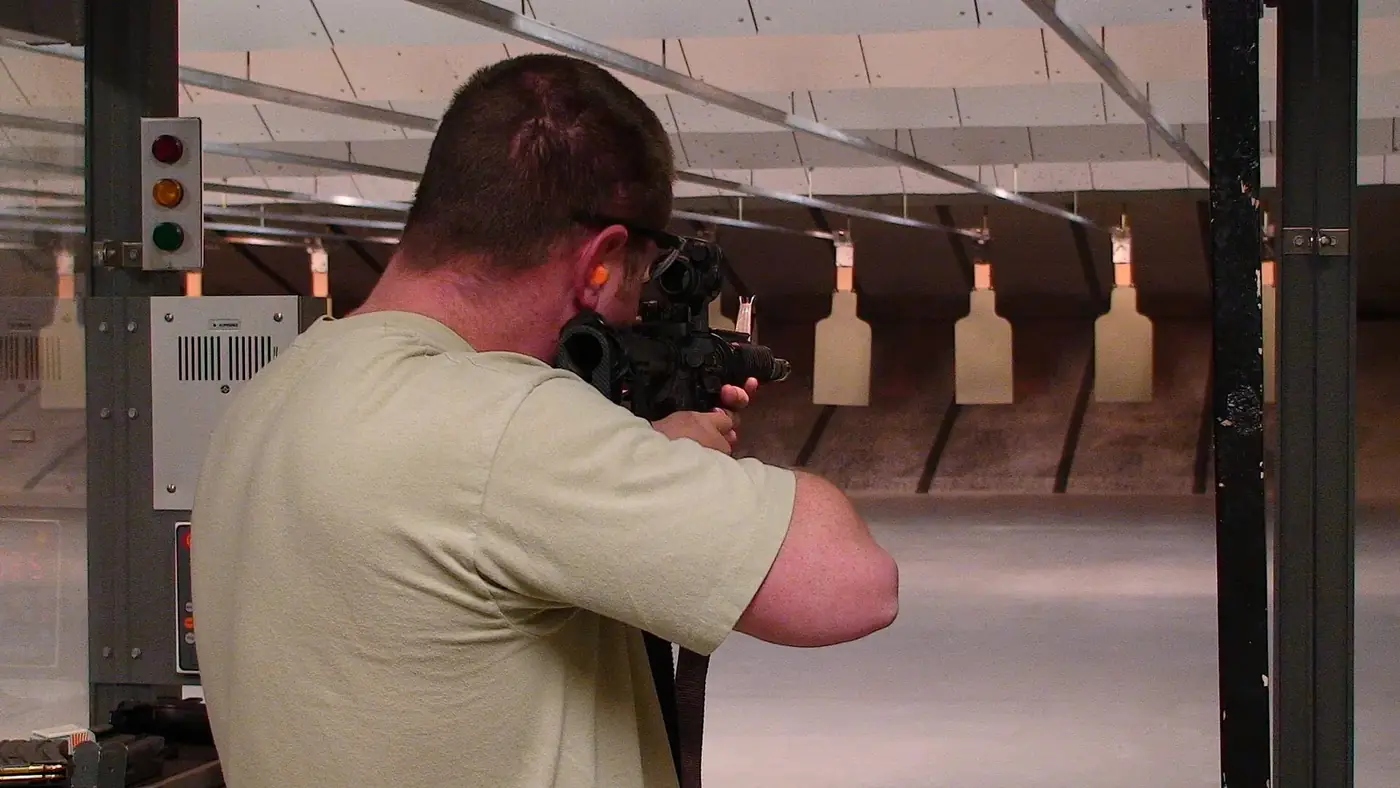
On your first trip to a shooting range, expect to sign a waiver, show a photo ID, listen to a short safety briefing, and then shoot from an assigned lane or bench while a range officer (RO) supervises. Bring eye protection, hearing protection, your ID, and a firearm in a case (or plan to rent one). Wear closed-toe shoes and a crew-neck shirt. Everything else is optional, and most ranges will happily walk a beginner through the process if you tell them it is your first visit.
Key points
- Expect a waiver, a photo ID check, a short safety briefing, and a lane supervised by a range officer.
- Bring eye protection, hearing protection, your ID, and a cased firearm (or plan to rent one).
- Wear closed-toe shoes, a crew-neck shirt and a cap to deal with hot brass.
- Pick a staffed range with rentals or lessons, and tell staff it is your first visit.
Pick a range that suits a first visit
Not every range is set up for newcomers. A private club with no staff on site is a hard place to learn. For a first visit, look for:
- Staff on site. Commercial indoor ranges and many outdoor ranges have an RO on duty during open hours.
- Rentals. If you do not own a firearm yet, a range with rentals lets you try one before you buy. We list 239 ranges with rentals; browse them on our ranges with rentals page.
- Lessons or intro classes. 443 ranges in our directory offer lessons. A one-hour intro session with an instructor is the fastest way to get comfortable. See ranges with lessons.
- Day passes. Some ranges are members-only. If you are not ready to join, filter for day-pass ranges.
Indoor ranges are often the easiest first stop because they are climate controlled, staffed, and usually rent both guns and protective gear. Outdoor ranges offer longer distances and more space. If you are torn between the two, our guide to indoor vs outdoor shooting ranges covers the trade-offs.
Call ahead or check the range's website. Ask about hours, whether you need a reservation, whether they rent firearms, what calibers are allowed, and whether they sell ammunition. Many ranges require you to use ammunition bought on site, or forbid certain types such as steel-core or tracer rounds.
| Question to ask | Why ask |
|---|---|
| What are your hours? | Some ranges close lanes early or for events |
| Do I need a reservation? | Busy ranges may have no open lanes for walk-ins |
| Do you rent firearms? | Lets you shoot without owning a gun yet |
| What calibers are allowed? | Some ranges limit what can be fired on their lanes |
| Do you sell ammunition, and is outside ammo allowed? | Many require on-site ammo or ban steel-core and tracer rounds |
What happens at check-in
Check-in at most staffed ranges follows the same pattern:
- Waiver and ID. You will sign a liability waiver and show government-issued photo ID. Minors usually need a parent or guardian present. Age rules for renting handguns versus long guns vary, so ask.
- Safety briefing or video. Many ranges require first-time visitors to watch a short safety video or read and sign the range rules.
- Lane assignment. You will get a lane number or bench, and sometimes a set time block.
- Rentals and purchases. If you are renting a firearm, staff will hand it over, often with ammunition you buy at the counter. You can also buy or borrow eye and ear protection and targets.
If you bring your own firearm, it should arrive unloaded and cased. Do not uncase it in the lobby or parking lot. Carry it to your lane and uncase it there, pointed downrange.
The safety rules you will hear
Every range teaches some version of the same core rules. Learn them before you go:
- Treat every firearm as if it is loaded. Even one you just checked.
- Keep the muzzle pointed in a safe direction. On a range, that means downrange, always.
- Keep your finger off the trigger until your sights are on the target and you are ready to fire. Rest it straight along the frame.
- Know your target and what is beyond it. Only shoot at your own target, inside the backstop.
On top of these, ranges have their own rules and commands, such as "cease fire" and "the line is hot." When someone calls cease fire, stop shooting immediately, take your finger off the trigger, and wait for instructions. Never go forward of the firing line unless the range has been declared cold. Our post on shooting range rules and etiquette explains the commands in detail.
If you are unsure about anything, stop and ask the RO. They would much rather answer a question than correct a mistake.
What to bring
Essentials
- Eye protection. Impact-rated shooting glasses protect against ejected brass, debris and fragments. Regular prescription glasses may not be impact rated. Look for ANSI Z87.1 rated shooting glasses, or safety glasses that fit over prescription lenses.
- Hearing protection. Gunshots are roughly 140 to 175 dB, well above the level that can cause permanent hearing damage. Foam plugs are cheap and effective; electronic earmuffs let you hear range commands while blocking loud noise. Indoors, many people wear both plugs and muffs. More in our hearing protection guide.
- Photo ID.
- Your firearm, unloaded and cased, if you are bringing one. A padded soft case or lockable hard pistol case works.
Useful extras
- Targets. Most ranges sell them, but bringing your own paper targets can save time. Check which types the range allows.
- A stapler or tape for outdoor target frames.
- A small range bag to keep everything together. See our range bag checklist for a full packing list.
- A brimmed cap. It keeps hot brass from bouncing down behind your glasses.
- Water and a snack for outdoor ranges.
What to wear
Clothing matters more than people expect. Hot brass ejects from semi-automatic firearms and can land on skin or slip into clothing.
- Wear: a crew-neck shirt, long pants or sturdy shorts, closed-toe shoes, and a cap.
- Avoid: low-cut or V-neck tops, open-toe shoes and sandals, and loose clothing that could snag.
Safety: If a piece of hot brass does go down your shirt, keep the firearm pointed downrange, set it down safely on the bench, and only then deal with the brass. Turning around with a firearm in hand is one of the most common beginner mistakes.
What to leave at home
- A loaded firearm for the drive. Most ranges want guns to arrive unloaded and cased. Laws on transporting firearms vary by state and locality, so check your state's official resources before you travel. Our post on gun cases and transport covers the basics.
- Alcohol. No range allows shooting after drinking.
- Prohibited ammunition. Ask the range what is allowed.
- Distractions. Put your phone away while on the firing line.
Your first time on the line
When you reach your lane, set your gear down, put on your eye and ear protection, and only then uncase your firearm with the muzzle pointed downrange. Start with your target close, around 3 to 7 yards for a handgun. Load a few rounds rather than a full magazine. Focus on a steady grip, a clear sight picture and a smooth trigger press. Small groups at short range build confidence faster than scattered hits at long range.
If you have a malfunction, keep the muzzle downrange, take your finger off the trigger, and call the RO if you are unsure how to clear it. When you are done, unload, lock the action open, let the RO or a staff member confirm it is clear if they ask, case the firearm, and clean up your spent brass and targets as the range directs.
Wash your hands and face before eating, drinking or touching your face. Lead residue from primers and bullets collects on your hands. Many ranges sell lead removal wipes for this.
Wrap-up
Your first visit is mostly about learning the routine: check in, listen to the briefing, follow the four safety rules, and ask questions. Choose a staffed range with rentals or lessons, bring eye and ear protection, and dress for flying brass. To get started, find a range near you, or browse ranges by state. If your local range is missing from our directory, you can add it here.