
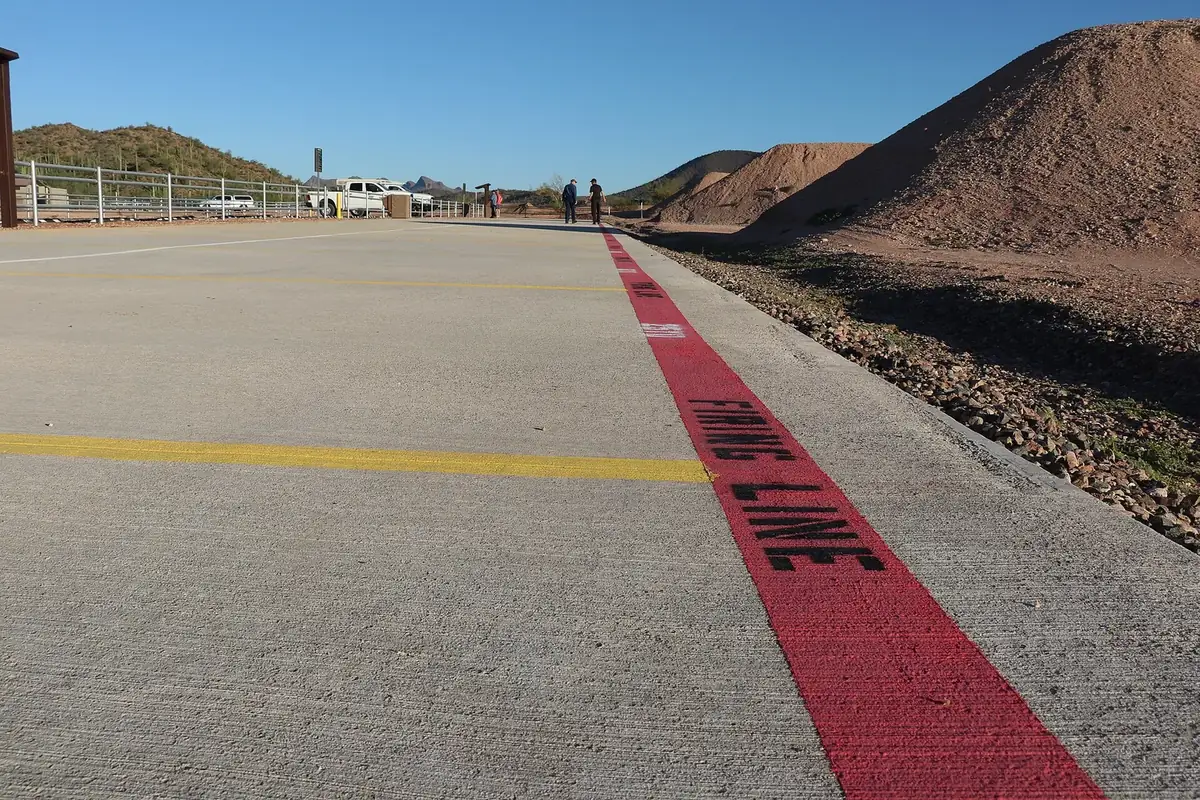
Yes, you can generally target shoot on Bureau of Land Management (BLM) land. The BLM says over 99 percent of the lands it manages are open to shooting, hunting and other recreation, and recreational target shooting is allowed unless an area is closed or restricted. The main exceptions are developed recreation sites (campgrounds, trailheads, picnic areas and similar), areas closed by a local order, and temporary closures during fire restrictions. Rules are set largely by each state office and field office, so the most important step is checking with the BLM field office that manages the land you plan to visit.
Key points
- Recreational target shooting is generally allowed on BLM land unless an area is closed or restricted.
- Do not shoot at developed recreation sites, near homes or people, from or across roads and trails, in closed areas, or during fire restrictions.
- Use a solid natural backstop and purpose-made targets, and pack out all casings, targets and trash.
- Rules vary by field office, so check with the office that manages the land before each trip.
Where shooting is not allowed
Even on land that is generally open, you should not shoot:
- At or near developed recreation sites, such as campgrounds, picnic areas, trailheads and visitor facilities.
- Near occupied buildings, homes or people. Some BLM offices set a minimum distance; for example, BLM guidance for Arizona lists 150 yards from residences, buildings, campsites and occupied areas. Distances and wording vary, so check the local rules.
- From or across any road or trail. BLM guidance is clear on this one.
- In areas closed to shooting. Some areas are closed by order because of nearby homes, heavy visitor use, cultural sites, wildlife or past problems. Closures are often posted on signs and listed on the field office's web page.
- During fire restrictions, when recreational target shooting may be temporarily prohibited.
Also watch for land ownership. BLM land is often mixed with private, state trust and other federal land, sometimes in a checkerboard pattern. Use a current BLM map or a mapping app that shows land ownership, and do not assume a dirt road or open desert is public.
Tip: BLM land is often mixed with private and state trust land in a checkerboard pattern. Confirm ownership on a current map before you set up.
Choosing a safe spot
The core safety rules apply exactly as they do at a range: treat every firearm as loaded, keep the muzzle pointed in a safe direction, keep your finger off the trigger until you are ready to fire, and be sure of your target and what is beyond it. On open land, that last rule does most of the work.
- Use a solid, natural backstop. A tall dirt hillside or a steep earthen bank is ideal. BLM guidance calls for a solid, natural backstop every time.
- Do not shoot over ridgelines or into areas where you cannot see what is behind the target. Roads, trails, cabins and livestock may be out of sight.
- Avoid rocks and hard surfaces in and around the target area. Bullets ricochet off rock, and bullet strikes on rock can spark fires.
- Shotguns need a backstop too, since shot travels a long way over open ground.
- Keep the firing line clear. Agree on clear commands with your group and only go downrange when every firearm is unloaded and set down. Our guide to range rules and etiquette covers commands that work just as well in the field.
- Know the area is shared. Hikers, riders, off-highway vehicle users and ranchers may appear at any time. Stop shooting and wait if anyone approaches.
Targets: what to use and what to avoid
Bring your own purpose-made targets and a stand rather than using whatever you find. A portable target stand with cardboard or paper targets keeps things simple and easy to pack out. Our shooting targets guide compares paper, steel and reactive options.
Common rules and guidance across BLM offices:
- No exploding targets in many areas. BLM Utah, for example, prohibits possession or use of exploding targets, and BLM nationwide guidance says not to use them because they can start fires and cause injuries.
- No tracer or incendiary ammunition in many places, for the same fire reasons. BLM Utah also lists steel-core rounds among the ammunition not to use.
- No glass, appliances, electronics or other trash as targets. These are commonly prohibited or discouraged because they leave sharp debris and hazardous materials behind.
- Do not attach targets to trees, signs or natural features, and do not shoot at public property, signs or fences.
- Steel targets should be set at a safe distance for your firearm with a backstop behind them, and placed on soft ground rather than rock. Follow the target maker's minimum distance guidance.
In short:
| Target | Guidance |
|---|---|
| Paper or cardboard on a stand | Simple, and easy to pack out |
| Steel | Safe distance, soft ground, backstop behind |
| Exploding targets | Banned in many areas; BLM says not to use them |
| Glass, appliances, electronics, trash | Commonly prohibited or discouraged |
| Trees, signs, fences | Never use as targets or target holders |
Cleanup
BLM guidance asks shooters to pack out all shell casings, targets and trash. Popular dispersed shooting spots often get closed because of what people leave behind: broken glass, shot-up furniture, piles of brass and shotgun hulls. Bring a trash bag and a bucket for brass, and leave the spot cleaner than you found it. It keeps the land open for everyone.
Fire safety
Target shooting has started wildfires on public land, especially in dry grass and brush. Bullets striking rock or steel can throw sparks, and hot vehicle parts can ignite dry vegetation.
- Check fire restrictions before every trip. BLM offices issue fire restrictions and orders that can limit or ban target shooting, sometimes for whole seasons, and some areas have standing fire prevention orders. Restrictions can also limit shooting to certain hours.
- Park on bare ground, away from dry grass and brush.
- Carry water and a fire extinguisher, plus a shovel.
- Clear dry vegetation from around targets where you are allowed to, and do not shoot into dry grass.
- Report any fire immediately by calling 911.
Permits and organized shooting
Casual target shooting by individuals and small groups generally needs no BLM permit, but commercial, competitive or organized group activities require one. If you are planning an event, a class or a match, contact the field office well in advance. State law still applies on BLM land too, including state rules on hunting, possession and transport.
Designated BLM shooting areas
Some BLM offices manage designated recreational shooting sites with berms, shade structures or benches, often near cities where dispersed shooting caused problems. These sites can be a good choice if you want a defined backstop and a clear set of rules, and some have hours or seasonal limits.
Our directory includes 62 locations sourced from BLM records and 36 from US Forest Service records, alongside 764 public ranges overall. You can browse public shooting ranges by state, for example public ranges in Utah, or see the free ranges we list. If you prefer an established facility with a range officer, look at outdoor ranges near you.
Before you go: checklist
- Confirm the land is BLM-managed using a current land ownership map.
- Check the field office web page for closures, special rules and fire restrictions.
- Pack purpose-made targets, a stand, and bags for trash and brass.
- Bring eye and ear protection. Our guides to hearing protection and shooting glasses cover what to look for.
- Bring water, a fire extinguisher, a shovel and a first aid kit.
- Pick a spot with a solid dirt backstop, away from roads, trails, campsites and buildings.
- Clean up everything before you leave.
Where to check the rules
- The BLM website has state office pages, field office contacts and fire restriction announcements.
- Your BLM field office can tell you about local closures and designated shooting areas.
- Your state wildlife agency covers hunting rules, which also apply on BLM land.
Wrap-up
BLM land offers a lot of room to shoot, as long as you use a safe backstop, stay away from developed sites and roads, follow fire restrictions and pack out everything. Rules vary by field office, so call or check online before each trip. If you want a managed facility instead, browse public ranges or find a range near you. Know a public shooting area we are missing? Add it to the directory.