
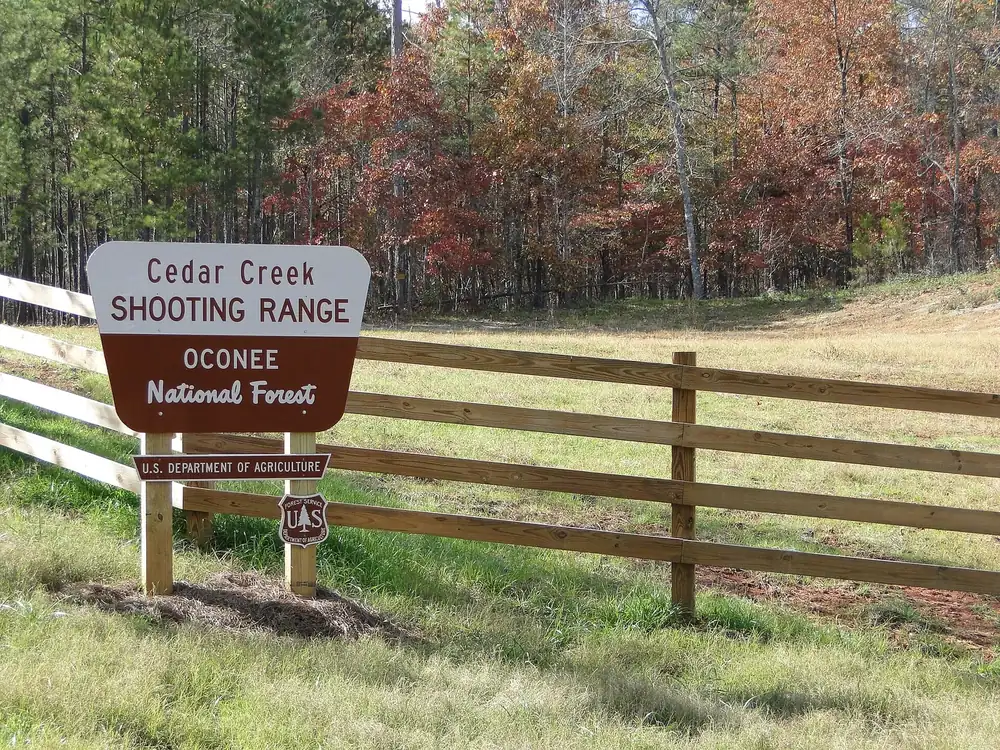
Target shooting is allowed on most national forests and grasslands unless an area is restricted. The US Forest Service says so directly, and the federal rules that apply everywhere are short: under 36 CFR 261.10(d), you may not discharge a firearm within 150 yards of a residence, building, campsite, developed recreation site or occupied area; across or on a National Forest System road or an adjacent body of water; in any manner or place that exposes a person or property to injury or damage; or into or within a cave. On top of that, each forest can issue orders that close areas to shooting, limit target types or ban shooting during fire season. Before you go, check the forest's alerts page and call the local ranger district.
Key points
- Target shooting is allowed on most national forests and grasslands unless an area is restricted.
- Federal rules bar shooting within 150 yards of homes, buildings, campsites, developed sites and occupied areas, and across or on forest roads and adjacent water.
- Tracers and incendiary ammunition are prohibited, and local orders can add closures, target limits or fire-season bans.
- Check the forest's alerts page and call the ranger district before every trip.
The federal rules, in plain terms
The national rule is in the Code of Federal Regulations at 36 CFR 261.10, which lists prohibited acts on National Forest System land. Paragraph (d) covers discharging a firearm (or any other implement capable of taking human life, causing injury or damaging property). Broken down:
150 yards from people and facilities
No shooting in or within 150 yards of:
- A residence (including cabins on private inholdings)
- Any building
- A campsite, including a dispersed campsite someone is using
- A developed recreation site, such as a campground, picnic area, trailhead or boat ramp
- An occupied area
150 yards is 450 feet, which is farther than it looks in the woods. A laser rangefinder takes the guesswork out of it, and it is useful for setting target distances too. Remember the distance is measured from where you shoot, and that a campsite can appear while you are there. If someone sets up camp within 150 yards, you have to stop or move.
Roads and water
No shooting across or on a National Forest System road, or an adjacent body of water. That rules out shooting from the road, standing on the road, or shooting over it at a target on the other side. The same goes for shooting across lakes, ponds and streams next to the road.
Anywhere someone could be hurt
The rule also prohibits shooting in any manner or place where any person or property is exposed to injury or damage. This is a catch-all, and it is the one that matters most in practice. If you cannot see what is beyond your target, if people are hiking nearby, or if there is no safe backstop, the shot is not allowed.
Caves
No shooting into or within a cave.
Tracers and incendiary ammunition
A separate federal rule on fire, 36 CFR 261.5(b), prohibits firing any tracer bullet or incendiary ammunition on National Forest System land.
The federal rules at a glance
| No shooting... | Source |
|---|---|
| Within 150 yards of a residence, building, campsite, developed site or occupied area | 36 CFR 261.10(d) |
| Across or on a forest road or adjacent body of water | 36 CFR 261.10(d) |
| Where any person or property is exposed to injury or damage | 36 CFR 261.10(d) |
| Into or within a cave | 36 CFR 261.10(d) |
| With tracer or incendiary ammunition | 36 CFR 261.5(b) |
Local forest orders
Forest supervisors can issue orders that add to the national rules for a specific forest, district or area. Common examples include:
- Closed areas. Places near communities, popular trails, or sites with repeated damage are often closed to recreational shooting.
- Target restrictions. Some forests limit targets to purpose-made types such as paper, cardboard, clay or steel. Many ban glass, appliances, electronics and other items that leave hazardous trash.
- Exploding targets. The Forest Service says exploding targets are not recommended, and many forests restrict or ban them because of fire and injury risk.
- Fire restrictions. During high fire danger, forests may prohibit recreational shooting entirely, or limit it to designated ranges.
- Designated ranges and shooting areas. Some forests host managed ranges with berms and firing lines.
Orders are posted on each forest's website (usually under alerts) and often on signs at trailheads and road junctions. Your local ranger district office can tell you what is in effect and where people commonly shoot safely. The Forest Service's general guidance is at fs.usda.gov.
State law applies on national forest land too, including state hunting regulations and firearm laws. Hunting seasons also bring more people into the woods, so wear blaze orange during hunting seasons even if you are only target shooting.
Picking a safe spot
The standard safety rules are your guide: treat every firearm as loaded, keep the muzzle pointed in a safe direction, keep your finger off the trigger until you are ready to fire, and know your target and what is beyond it.
- Find a real backstop. A steep dirt bank or hillside, free of rocks, that will stop every round. An old gravel pit can work if it is open to shooting and has a dirt face. Never rely on a flat clearing or a stand of trees.
- Avoid rocks and water. Both cause ricochets.
- Check the far side. Walk or look beyond the backstop. Trails, roads, cabins and grazing livestock can sit just over a rise.
- Do not attach targets to trees, signs or structures. Use a portable target stand instead.
- Be visible and courteous. Park where others can see your vehicle, and pause when hikers, riders or vehicles pass. A friendly wave and a cease-fire go a long way toward keeping an area open.
If you shoot steel, follow the maker's minimum distance and angle guidance, place steel on soft ground with a dirt backstop behind it, and never shoot steel with steel-core or armor-piercing ammunition. See our shooting targets guide for more on target types.
Fire safety
National forests are full of fuel. Bullets striking rocks or steel can spark, and dry grass can ignite from a hot exhaust.
- Check the forest's fire restrictions before every trip. They change quickly in summer and fall.
- Park on gravel or bare dirt, not dry grass.
- Carry water, a fire extinguisher and a shovel.
- Do not shoot into dry grass or brush, and avoid shooting in the heat of the afternoon on windy days.
- If you start a fire, try to put it out only if it is safe to do so, and call 911 right away.
Safety: Fire restrictions change quickly in summer and fall. Check them before every trip, not just the first one of the season.
Etiquette and cleanup
Dispersed shooting areas close when they turn into dumps. Forest Service guidance says not to leave property or trash behind, including targets, paper, cans, bottles and appliances.
- Pack out all targets, brass, shotgun hulls, boxes and trash. A bucket and a few contractor bags make this easy.
- Pick up other people's litter when you can.
- Keep noise in mind near campgrounds and homes, even outside the 150-yard limit. Shooting early in the morning near occupied campsites will not win friends.
- Do not damage trees, signs, gates or fences.
- Do not drink alcohol while shooting.
Gear for a forest shooting trip
- Eye and ear protection (see our guides to hearing protection and shooting glasses)
- Paper targets and a stand
- A rangefinder for distances
- Water, a fire extinguisher and a shovel
- A first aid kit, including something to control bleeding
- Trash bags and a container for brass
- A paper map or offline map with forest boundaries, since cell service is often poor
Prefer a managed range?
If the rules feel like a lot, or local forests are closed to shooting during fire season, a managed range is the easy option. We list 764 public ranges, including 36 locations sourced from US Forest Service records and 62 from BLM records. Browse public ranges by state, such as public ranges in Colorado, or look at outdoor ranges and rifle ranges near you. For shooting on other federal land, see our guide to target shooting on BLM land.
Wrap-up
In most national forests you can shoot as long as you stay 150 yards from homes, buildings, campsites, developed sites and occupied areas, never shoot across or on a forest road or adjacent water, use a safe backstop, skip tracers, and follow any local orders and fire restrictions. Check the forest's alerts and call the ranger district before you go, and pack out everything. To find a range instead, start at ranges near you, and if you know a public range we are missing, add it to the directory.