
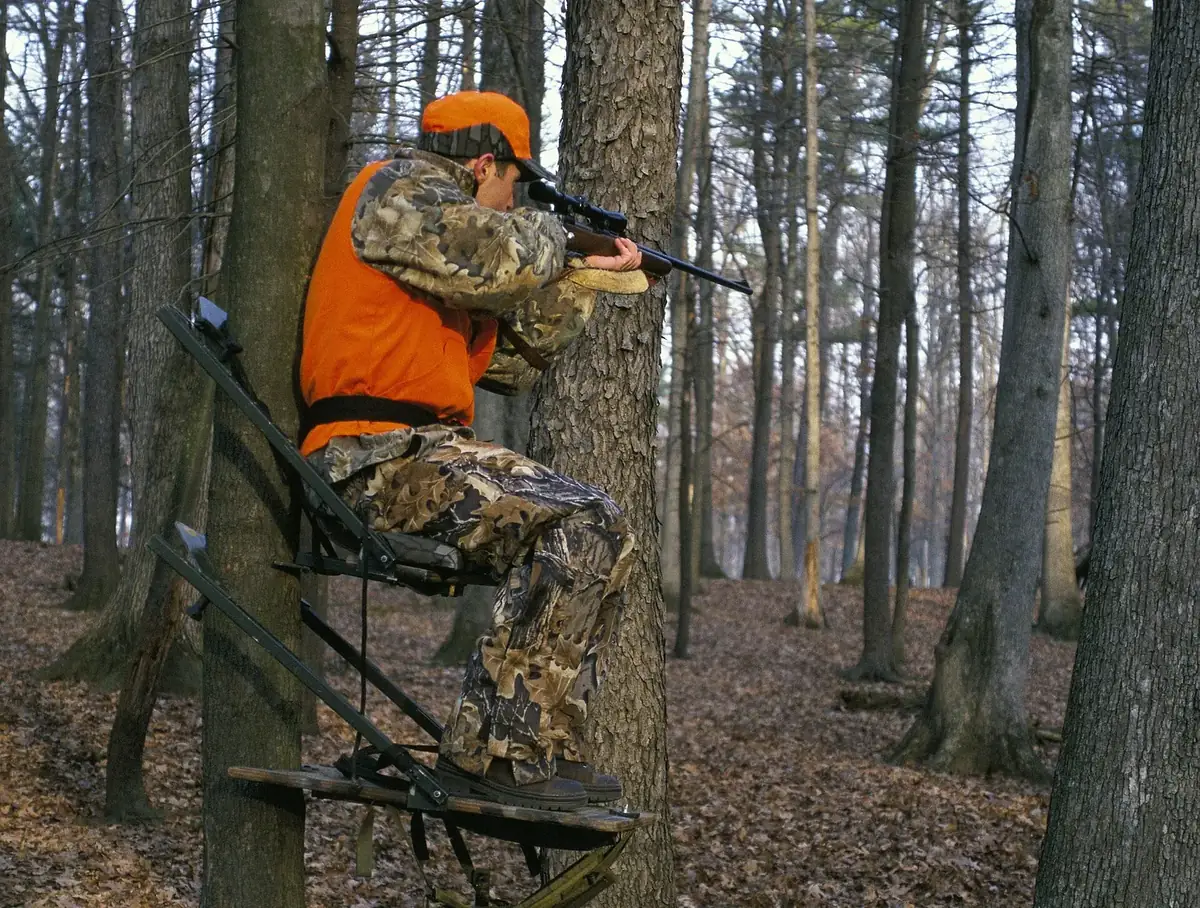
A good day-hunt pack covers seven things: legal documents (license, tags, hunter education proof), clothing layers and any required hunter orange, navigation, optics, a field dressing kit, first aid and emergency gear, and food and water. The rest depends on the species, the season and the ground you hunt. Use this checklist as a starting point, then adjust it for your state's rules, which you can find on your state wildlife agency's website.
Key points
- A day-hunt pack covers seven things: documents, clothing and hunter orange, navigation, optics, field dressing gear, first aid and emergency gear, and food and water.
- License, tag, hunter education and hunter orange rules vary by state, so check your state wildlife agency.
- Sight in your rifle or bow with the ammunition or arrows you will hunt with before the season.
- In a tree stand, wear a full-body harness whenever your feet are off the ground and use a haul line.
Documents and legal requirements
Laws vary a lot by state and by species, so treat this section as a reminder of what to check, not what is required where you hunt.
- Hunting license for the state and season, carried in the format your state accepts (paper, card or app).
- Tags or permits for the species and unit, plus whatever your state requires for tagging and reporting a harvest.
- Hunter education certificate. Many states require proof of a completed hunter education course, depending on your age or birth year. Requirements and exemptions differ, so check your state wildlife agency.
- Landowner permission in writing if you hunt private land, and maps of property boundaries.
- A copy of the current regulations for your area. Seasons, legal hours, weapon rules and bag limits change from year to year.
Clothing
Dress in layers you can add and remove as you move and sit.
- Base layer that wicks moisture: synthetic or merino, not cotton.
- Insulating layer sized to the coldest part of the day, usually dawn or a long sit.
- Outer layer that blocks wind and rain. Quiet rain gear matters when you are close to game.
- Boots that are broken in and suited to the terrain, plus spare socks.
- Hat and gloves, and a warmer pair for sitting still.
- Hand warmers for long sits in cold weather.
Hunter orange
Many states require hunters to wear a minimum amount of blaze orange (sometimes called hunter orange) during certain seasons, often firearm deer seasons. The amount, the placement (hat, vest, or both) and the seasons covered vary by state, and some states also allow or require blaze pink. Check your state wildlife agency for the exact rule. Even where it is not required, a blaze orange vest and hat make you visible to other hunters.
Firearm or bow
- Your rifle, shotgun or bow, sighted in and confirmed with the ammunition or arrows you will hunt with. Our guide to sighting in a rifle walks through the steps.
- Ammunition or arrows and broadheads that are legal for the species.
- A sling, and a case for transport. Transport and loaded-firearm rules in vehicles vary by state; our gun cases and transport guide explains the general approach.
- A small cleaning or repair item, such as a bore snake or spare string wax.
Practice before the season. Find rifle ranges and archery ranges near you, and pick up ammunition and licenses from a local gun shop if your state sells licenses through retailers.
Navigation and communication
- Phone with offline maps downloaded for your area, and a way to charge it.
- A paper map and compass as backup, because batteries die and signal drops.
- A GPS unit if you hunt big or unfamiliar country.
- Tell someone your plan: where you are parking, where you are going and when you expect to be back.
Optics
- Binoculars let you glass for game without sweeping your rifle scope across things you have not identified. Never use a scope as a substitute for binoculars.
- A rangefinder helps you stay within your effective range, especially for archery.
Our guide to binoculars and rangefinders for hunting explains magnification, exit pupil and angle compensation.
Field dressing and recovery
- A sharp knife, plus a sharpener or replacement blades. A field dressing kit bundles a knife, gut hook, saw and gloves.
- Disposable gloves for field dressing.
- Game bags to keep meat clean and cool. Breathable game bags are worth having for any animal you plan to quarter in the field.
- Rope or a drag strap to move game.
- Flagging tape to mark a blood trail or the spot where an animal was hit.
- Tagging supplies: a pen, zip ties or whatever your state requires to attach a tag.
- A cooler with ice waiting in the vehicle if the weather is warm.
First aid and emergency gear
- First aid kit with blister care, bandages, and anything you personally need. A compact outdoor first aid kit is a good base to build on.
- Headlamp with fresh batteries. You will likely walk in or out in the dark. A headlamp with a red light mode helps you keep your night vision.
- Fire starter and a lighter in a waterproof bag.
- Emergency blanket or bivy in case you get stuck overnight.
- Whistle for signaling.
- Multi-tool.
Tree stand and blind safety
Falls from tree stands are a well-known cause of hunting injuries. If you hunt from a stand:
- Wear a full-body safety harness whenever your feet are off the ground, including while climbing. A tree stand safety harness paired with a lifeline lets you stay connected from the ground up.
- Use a haul line to raise and lower your unloaded firearm or bow. Never climb with it in hand.
- Inspect stands and straps before each season and replace worn parts.
Safety: Unload before you climb, raise the firearm or bow with a haul line, and stay clipped in with your harness from the ground up.
Food, water and pack
- Water, more than you think you need, or a filter if water sources are reliable.
- Food that does not need cooking: something for every few hours.
- A pack sized for the hunt, ideally with a frame or load-carrying ability if you might pack out meat. A hunting daypack in a quiet fabric works for most day hunts.
- A seat cushion if you will sit on the ground.
- Scent control or calls as appropriate for the species.
Safety basics afield
The standard firearm rules apply every moment: treat every firearm as loaded, keep the muzzle pointed in a safe direction, keep your finger off the trigger until you are ready to shoot, and be sure of your target and what is beyond it. In hunting, that last rule means never shooting at sound, movement or color. Unload before crossing fences or difficult ground and before entering a vehicle or building.
Quick printable list
The seven core categories, and why each one earns a place in the pack:
| Category | Why it matters |
|---|---|
| Documents | License, tags and permission keep your hunt legal |
| Clothing and hunter orange | Layers keep you comfortable; orange keeps you visible |
| Navigation | Offline and paper maps work when signal drops |
| Optics | Binoculars identify game without using your scope |
| Field dressing | A knife, gloves and game bags keep meat clean |
| First aid and emergency | A headlamp, fire starter and blanket cover a night out |
| Food, water and pack | Long days and pack-outs need fuel and capacity |
Then the full list:
- License, tags, hunter education card, regulations, permission slips
- Layers, boots, spare socks, hat, gloves, hunter orange as required
- Firearm or bow, legal ammunition or arrows, sling, case
- Phone, offline map, paper map, compass
- Binoculars, rangefinder
- Knife, gloves, game bags, drag rope, flagging tape, tagging supplies
- First aid kit, headlamp, fire starter, emergency blanket, whistle, multi-tool
- Harness and haul line for stands
- Water, food, pack, seat
Before opening day
Get your rifle or bow dialed in at a range well before the season. Browse ranges by state or find ranges near you, and look for ones with day passes if you only need a few sessions a year. If you know a range or club we do not list, add it to the directory.